Why Proper Installation Matters
Hardscaping is one of the most permanent aspects of your landscape. Patios, walkways, and retaining walls aren’t features you can simply replace if they fail—rebuilding means tearing out tons of material and starting over. That’s why proper installation is so critical. A well-built hardscape should not only look beautiful but also withstand decades of use and New England’s challenging climate. Cutting corners may save money up front, but the long-term costs and frustration can be significant.
Key Practices for Hardscape Installation
Paver Bases
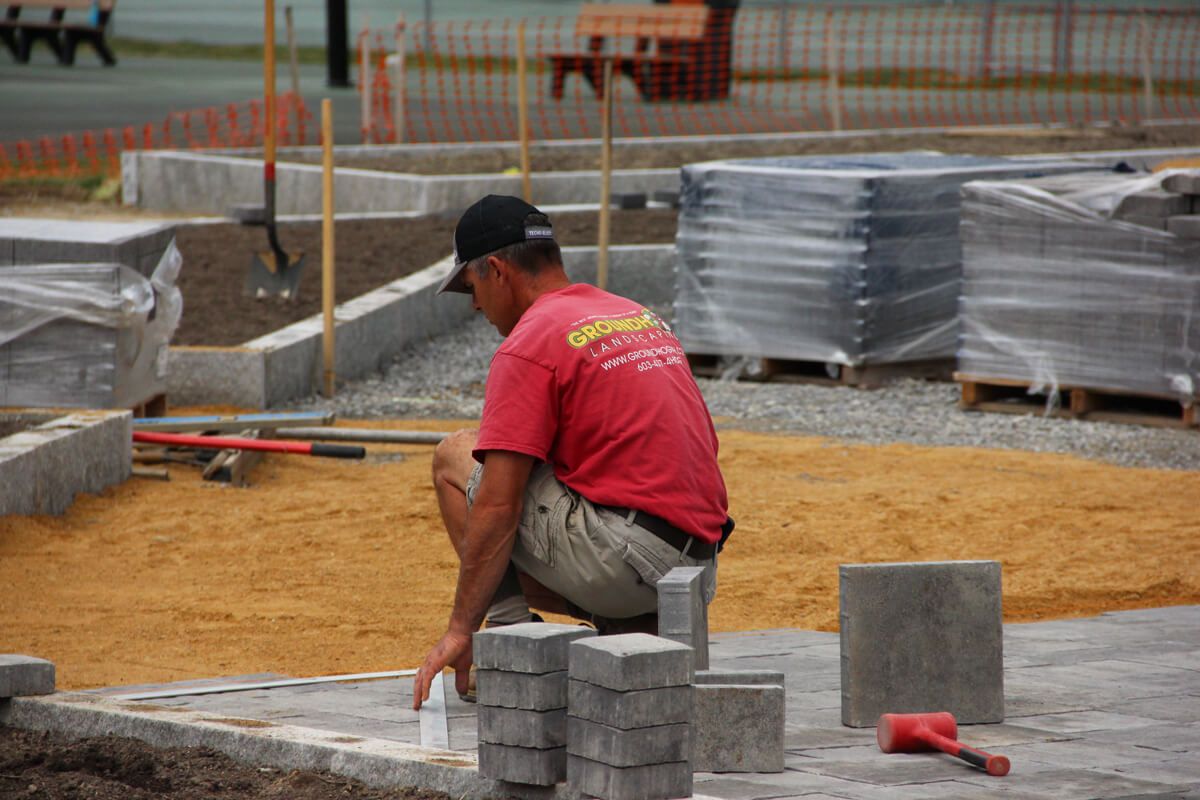
New Hampshire soils are often silty clay, which hold water and shift easily during freeze-thaw cycles. To prevent heaving and cracking, the first step is excavation—at least 9 inches below finished grade. The area is then filled with compacted, free-draining gravel that extends past the edge of the patio or walkway. A finer layer of stone on top ensures proper leveling and drainage beneath the pavers. Finally, the joints can be filled with polymeric sand or aggregate, locking everything into place while discouraging weeds.
Retaining Walls
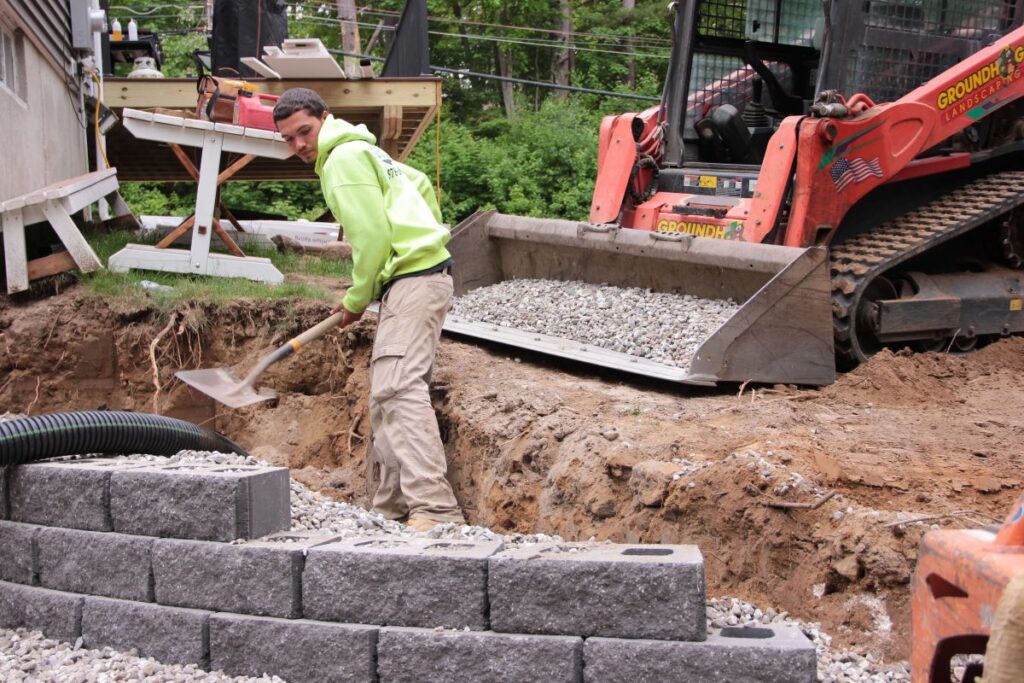
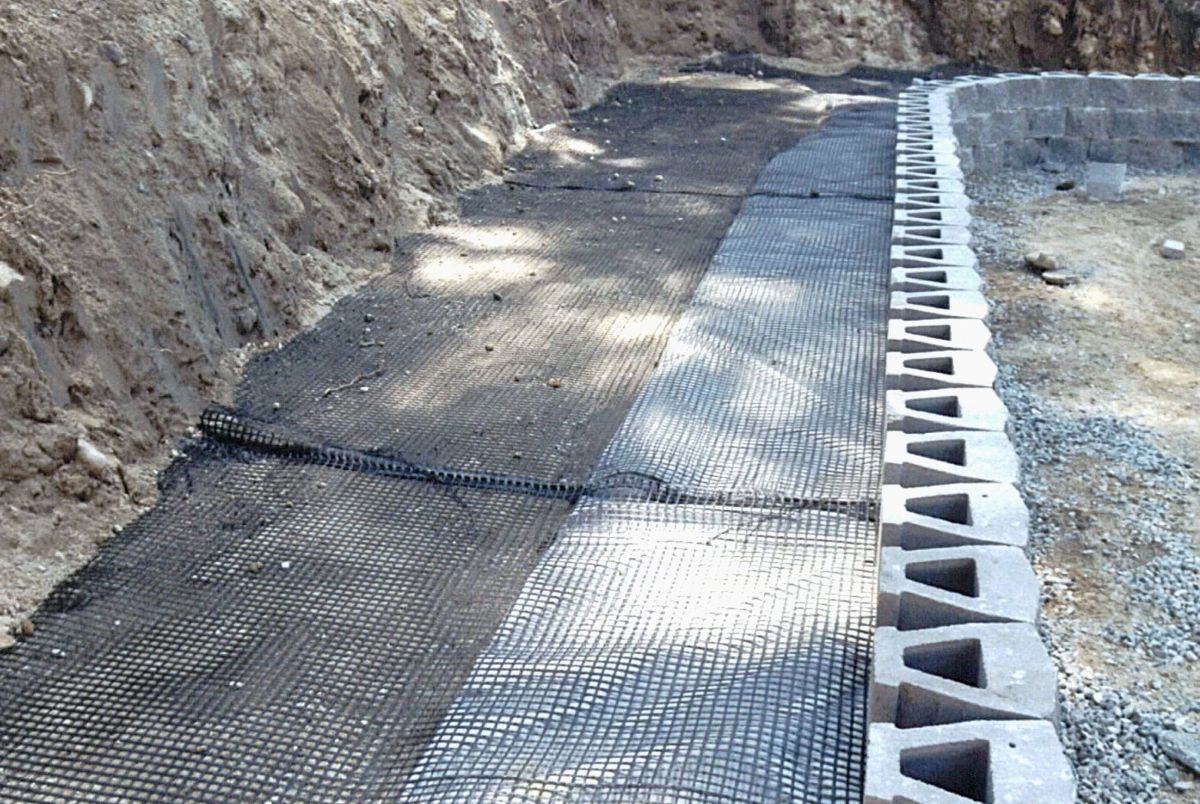
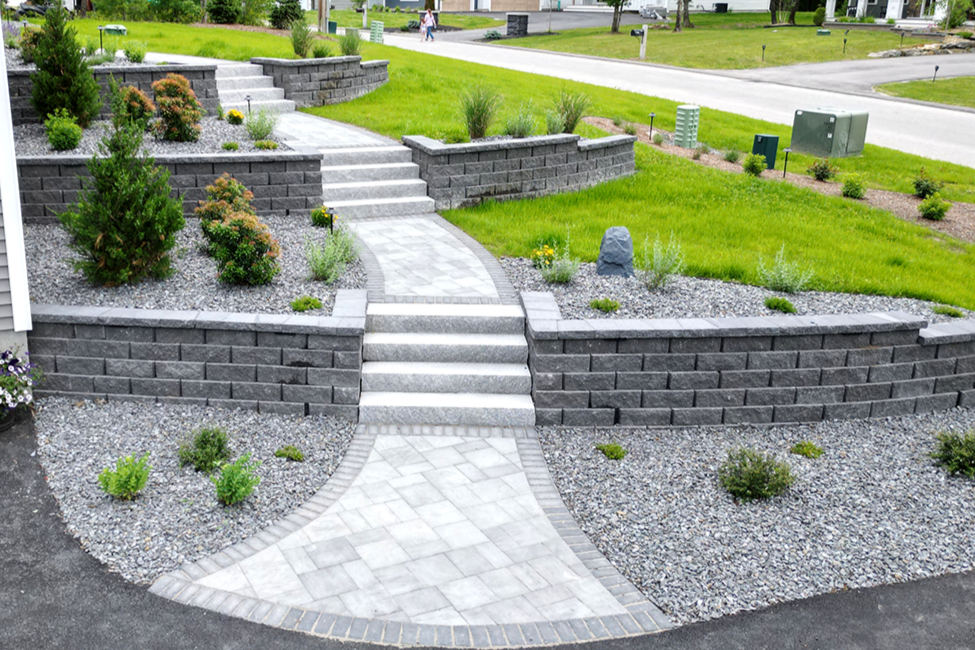
A retaining wall isn’t just stacked block—it’s an engineered system. The blocks themselves provide little structural strength; it’s the drainage and reinforcement behind the wall that matter. Crushed stone and a footing drain are installed to relieve pressure, while taller walls may require geogrid reinforcement layers that tie the wall back into the slope. These measures ensure that walls remain upright and functional, even under heavy loads and seasonal water movement.
The Cost of Shortcuts
When hardscape projects fail, the cause is almost always improper installation. Without enough excavation, bases shift. Without drainage, walls bow or collapse. Repairing these mistakes requires tearing out material and starting over, far exceeding the original cost. Investing in proper installation of hardscapes from the start saves money, time, and frustration.
Trust the Experts at Groundhog Landscaping!
Hardscaping is more than just laying block and stone – it’s building a foundation that lasts. With the right practices, patios, walkways, and walls can endure New England winters while looking beautiful year after year. Done right the first time, a hardscape is an investment that pays off for decades. When it comes to hardscapes, it’s best to let Groundhog Landscaping do the heavy lifting!